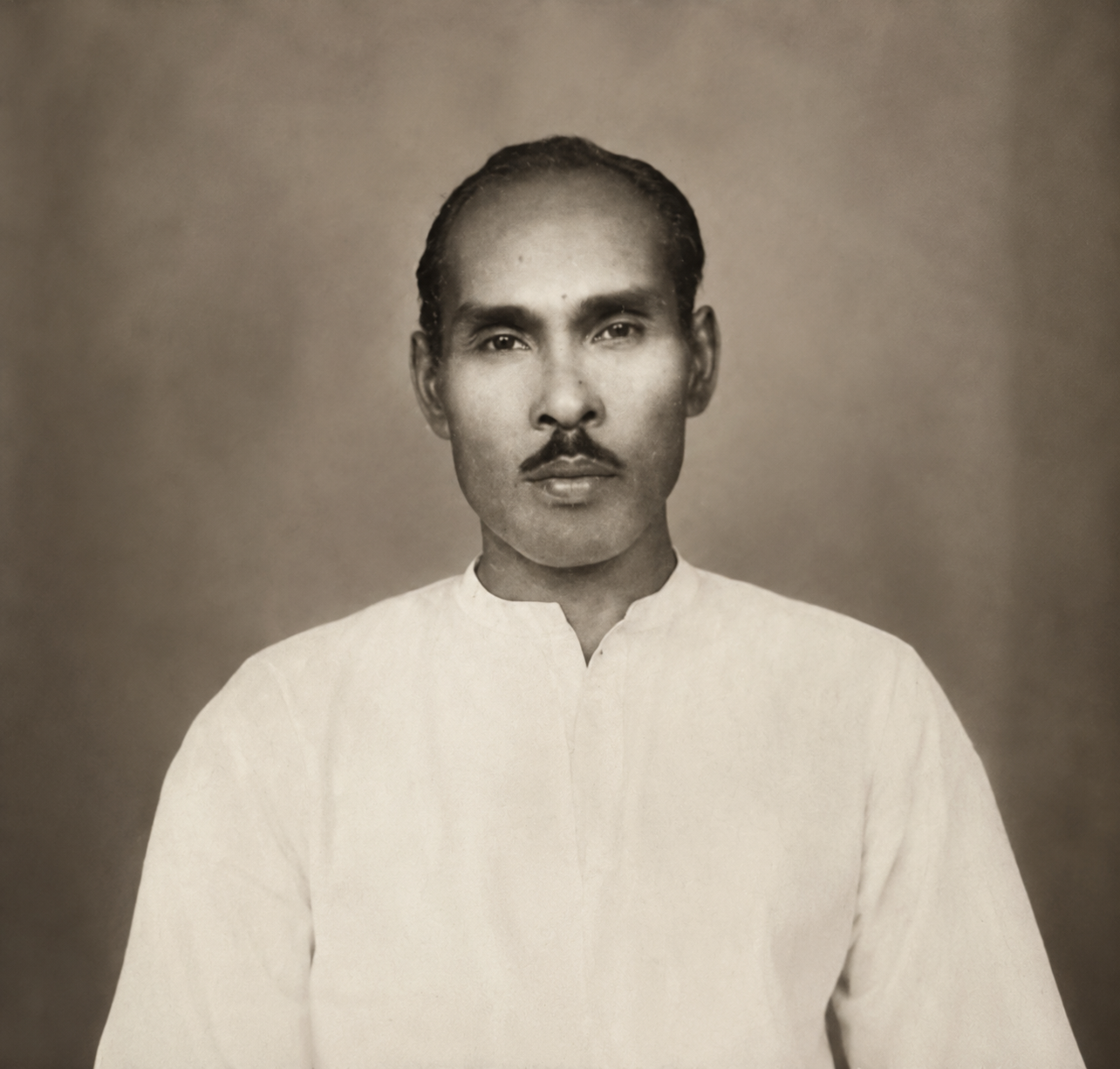
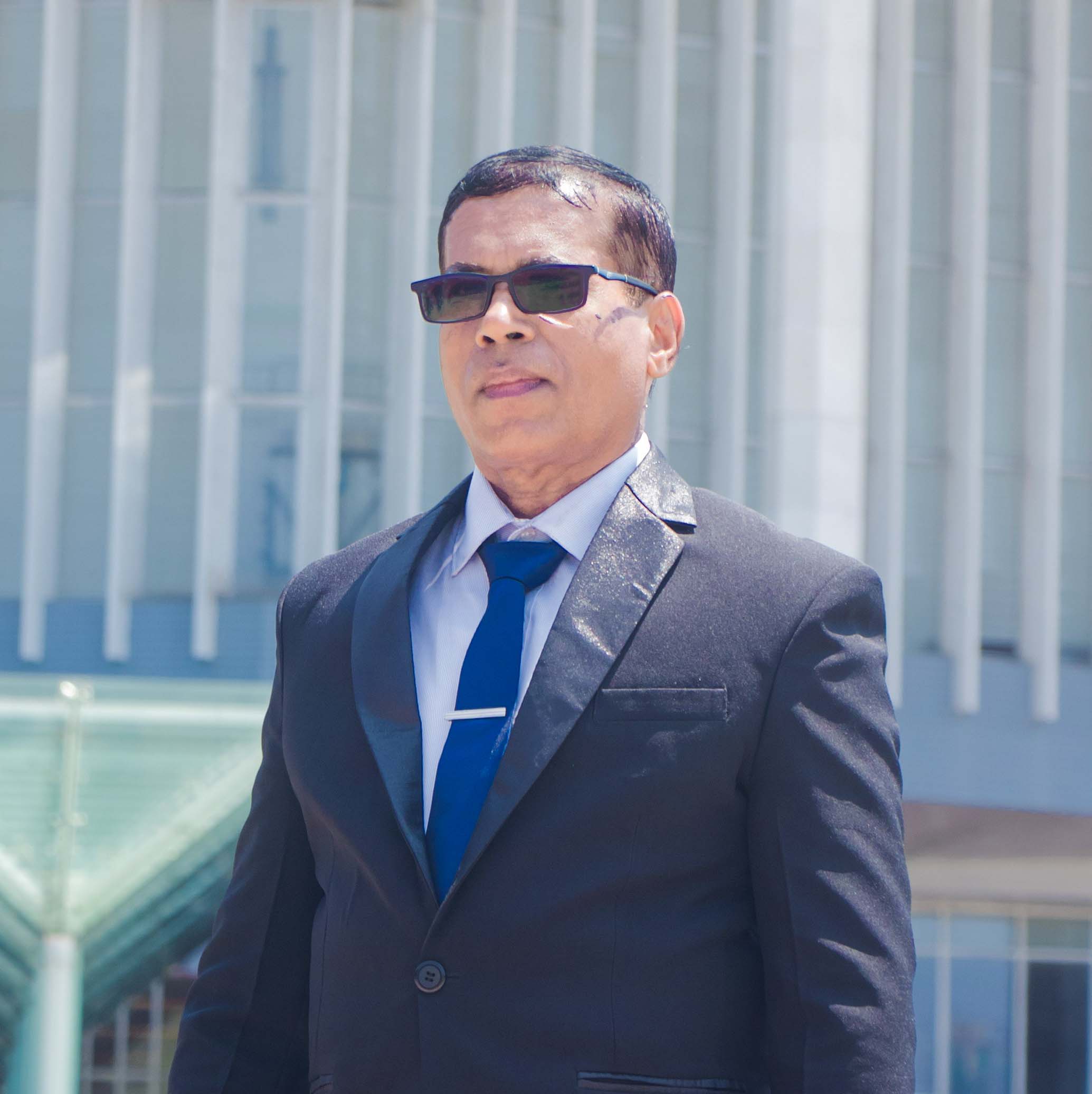
The knowledge, discipline, and values carefully preserved by our grandfather found their next guardian in his son. Born in 1962, our father chose, after completing his education, to dedicate his life to Sri Lanka’s traditional brass craftsmanship. For more than four decades, he has remained committed to preserving its authenticity, refusing to sacrifice traditional methods, quality, or artistic standards for convenience or commercial gain.
He believed that preserving tradition meant more than reproducing the achievements of previous generations, it also meant contributing to it. Guided by that belief, he designed original creations that respected Sri Lankan artistic heritage while introducing something new, including the Branch Oil Lamp and the Updated Dambadeniya Oil Lamp,
both of which have become signature pieces within our family’s collection. Alongside these innovations, decades of experience gave him the rare ability to transform historical sketches, photographs, and old references into authentic brass creations. His deep understanding of historic masterpieces, including the Dambadeniya Oil Lamp and the Kota Vehera Elephant Lamp, also enabled him to preserve not only their appearance but their original oil-flow systems and construction techniques.
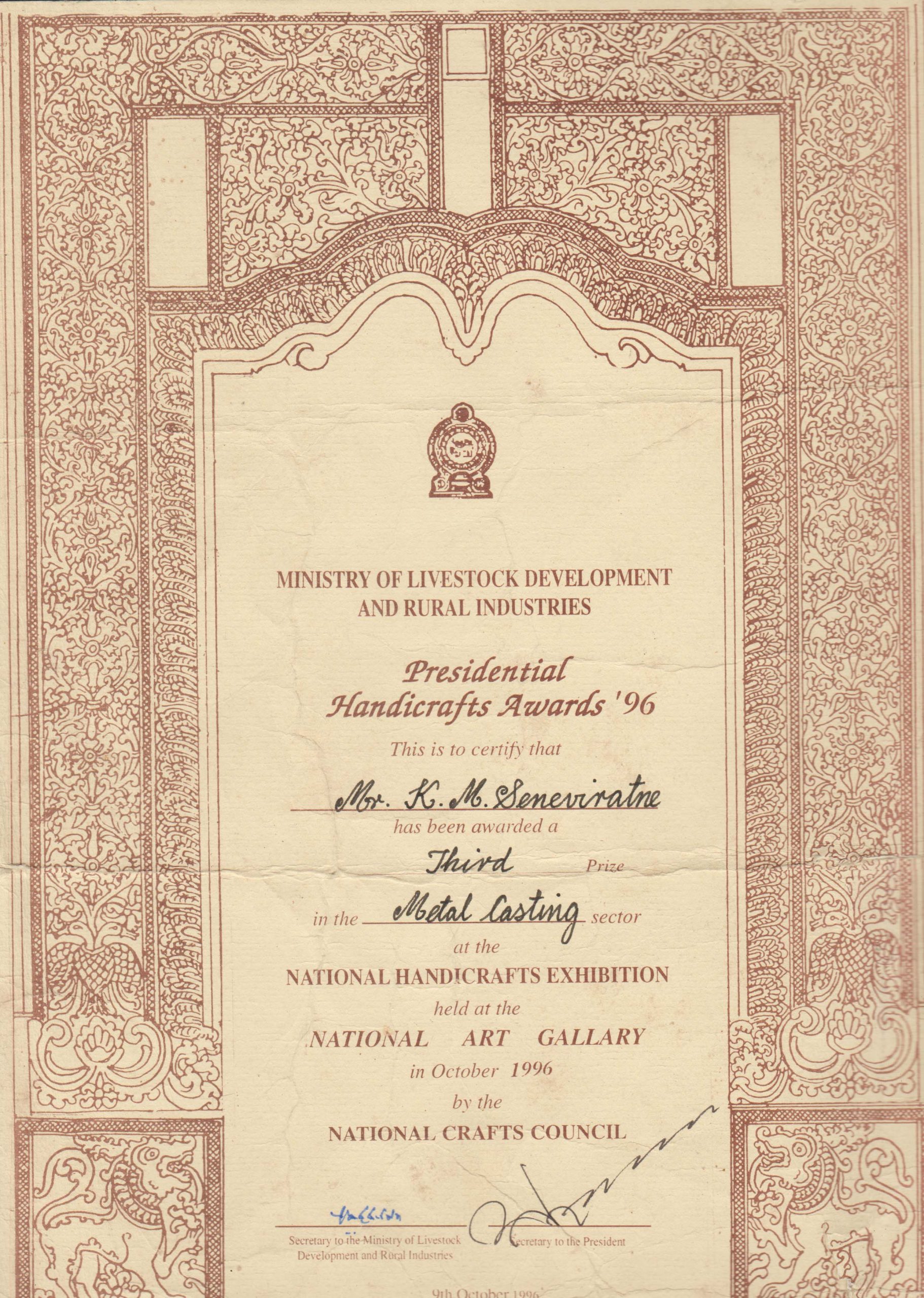
His dedication to traditional craftsmanship earned recognition through numerous national exhibitions and art competitions, where he received many awards, certificates, and honours, including recognition at the Presidential level. Yet one experience brought that journey to an end. After spending several months creating an original work for a exhibition, he entrusted it to the organisers for judging. However, when he returned to collect his work, he found parts of it left carelessly behind a door and beneath a table, as though months of dedication had been forgotten once the exhibition had ended.
For him, it was never simply a brass object, it represented months of patience, skill and respect for a tradition passed down through generations. Deeply disheartened by the experience, he chose to step away from competitive exhibitions and dedicate himself entirely to preserving traditional craftsmanship through his own work.
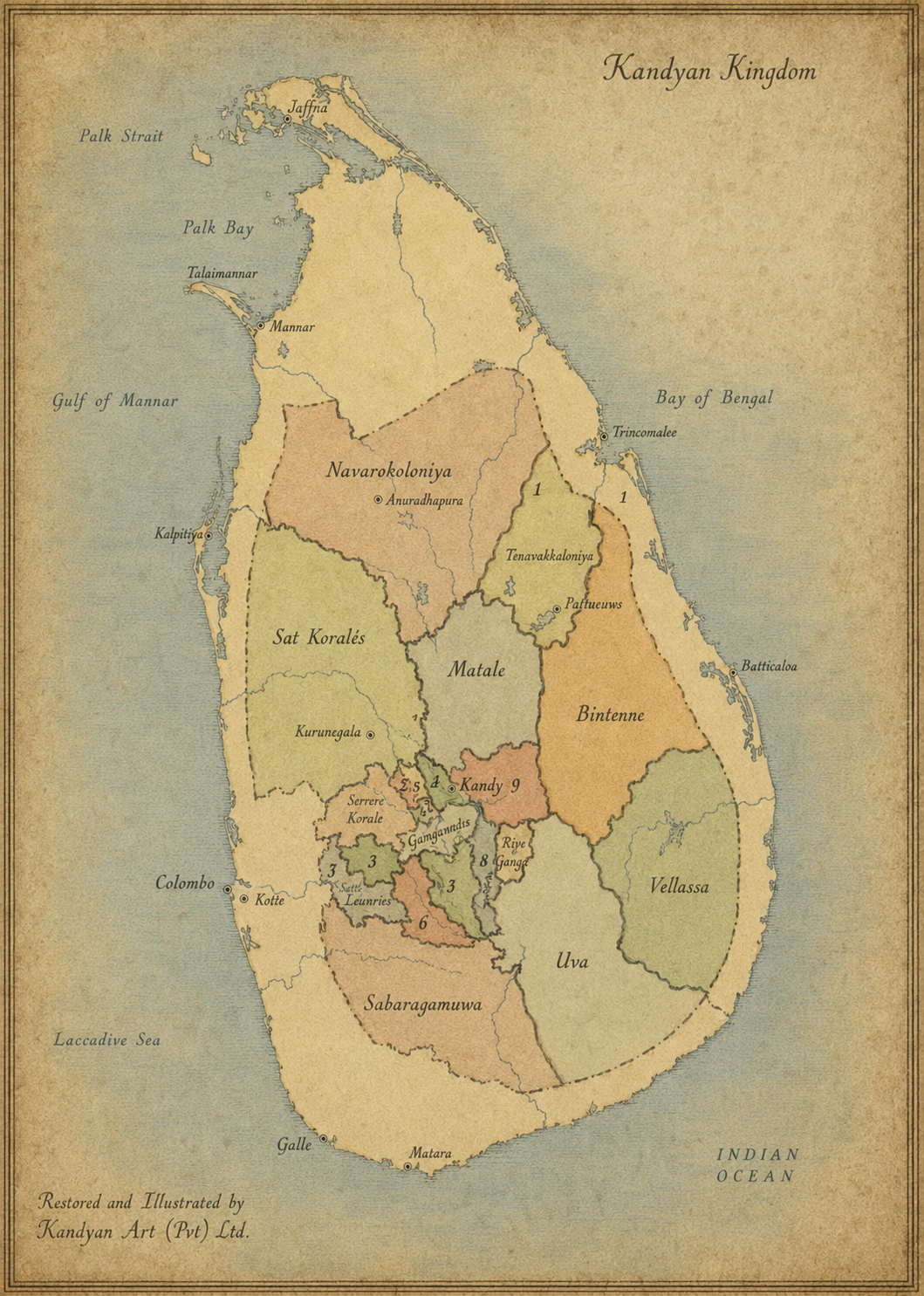
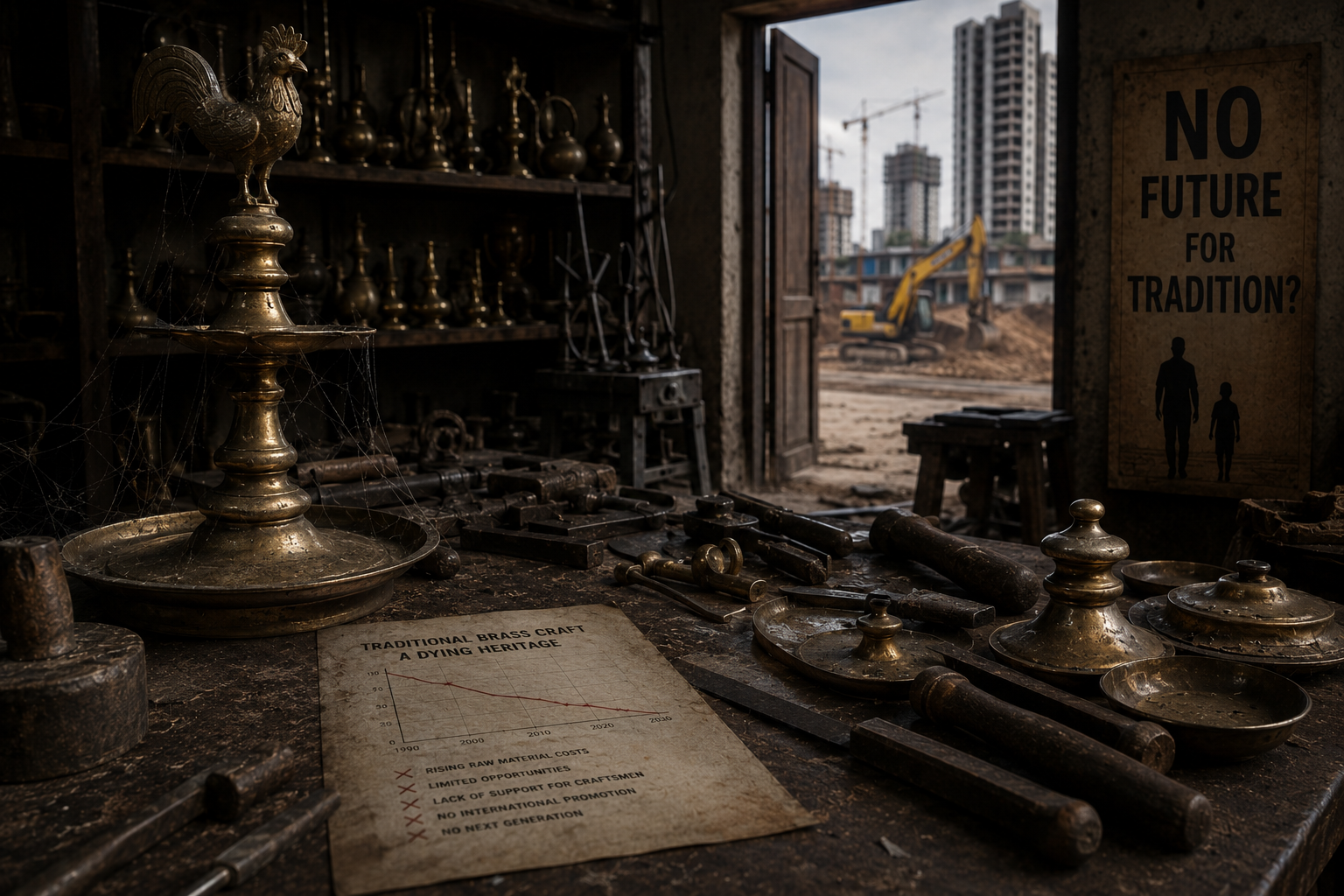
One of the causes closest to his heart was the Kandyan Art Association, established in 1882 to preserve and promote Sri Lanka’s traditional Kandyan arts and crafts. Believing deeply in its founding purpose, he dedicated years to preparing proposals, conducting research, and meeting repeatedly with those responsible for the institution, hoping to strengthen its role in supporting traditional craftsmen and passing their knowledge to future generations. This was not a single attempt, but an effort he pursued again and again over many years, investing countless hours of personal time, research, and determination. Yet despite all of those efforts, his proposals received little attention and no meaningful action followed. Time after time, the improvements he worked so hard to achieve remained unrealised because the support and commitment needed from those responsible never came.
His determination extended beyond institutions. Long before rising brass prices became one of the greatest challenges facing traditional craftsmen, he recognised the danger they posed to the future of the industry. He understood that continued pressure on raw materials would make it increasingly difficult for skilled craftsmen to continue their work and discourage future generations from entering the field. For years, he raised this issue, presented his concerns, and proposed possible solutions to those responsible, believing that timely action could protect the future of Sri Lanka’s traditional brass industry. However, despite his repeated efforts, the attention and action needed from those with the authority to address the issue never followed. As the years passed, many of the challenges he had warned about gradually became reality, placing greater pressure on craftsmen and the survival of the tradition itself. After years of trying to bring wider change, he accepted that some challenges could not be overcome by one craftsman alone and chose to continue protecting the heritage through the one place where he could still make a difference, his own workshop and his own craftsmanship.
 Today, after more than 45 years of continuous dedication, his legacy cannot be measured only by the works he has created or the honours he has received. It is reflected in the traditions he refused to compromise, the knowledge he carefully preserved, and the values he passed to the next generation. Every piece that leaves his workshop continues to embody the same principles that have guided our family for generations.
As every generation eventually reaches the moment when its knowledge and responsibility must be passed forward, so too did his journey reach a turning point. For generations, this heritage was carried through dedication, sacrifice and a deep respect for tradition. Yet after decades of effort to protect it, the next generation faced a difficult reality, the path that had carried our family for generations had become harder to continue. The following chapter is not only about what comes next, but about the moment when a treasured heritage reaches an uncertain future.